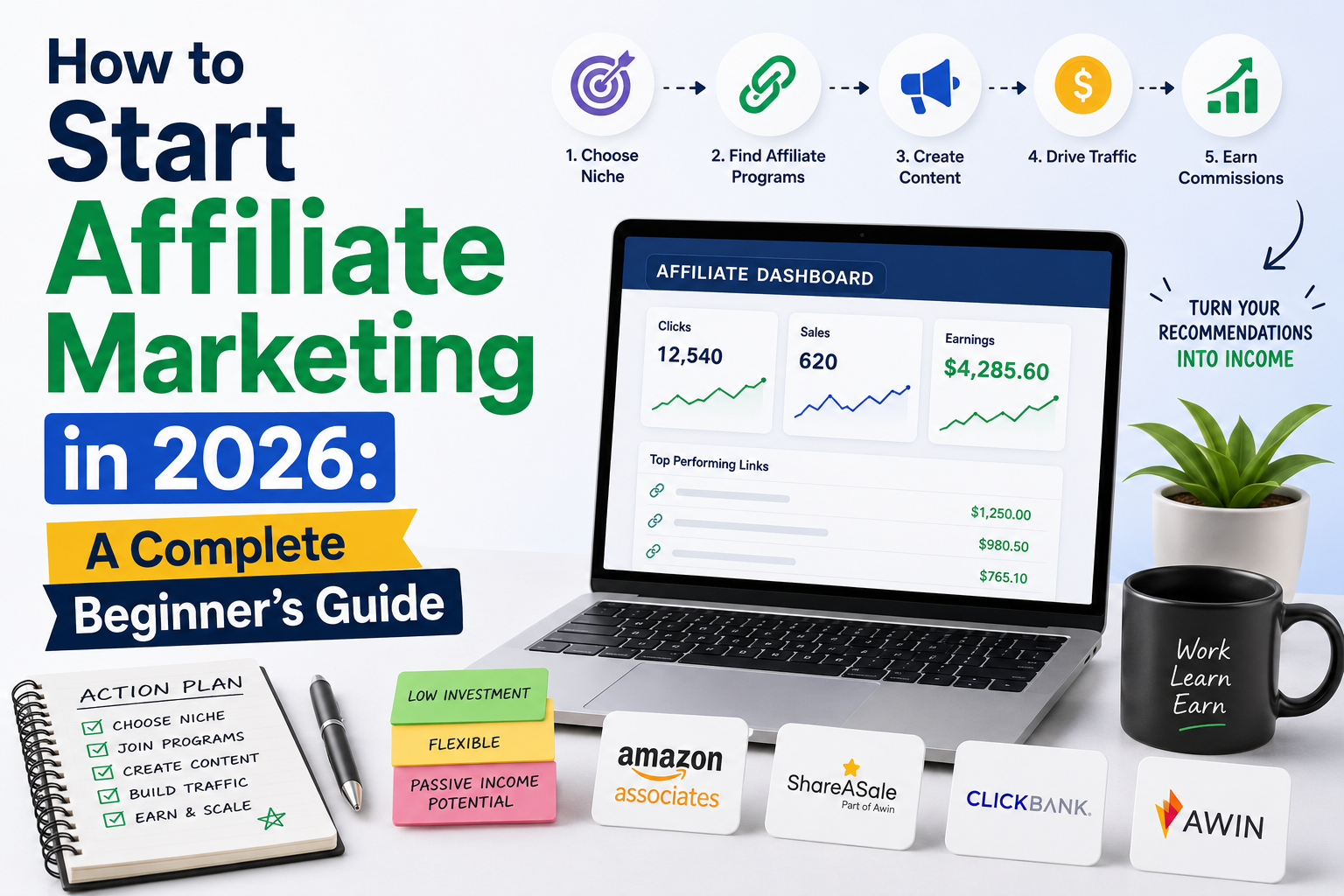
How to Start Affiliate Marketing in 2026: A Complete Beginner's Guide
Affiliate marketing can generate passive income around the clock — but only if you set it up correctly. This step-by-step guide shows you exactly how to start, even with zero experience.
What Is Affiliate Marketing?
Affiliate marketing is a performance-based income model where you earn a commission by promoting other companies' products or services. When someone clicks your unique affiliate link and makes a purchase, you get paid — often a percentage of the sale or a flat fee.
It's one of the most accessible online income streams: no product creation, no customer support, no inventory. Just content and links.
How Much Can You Earn?
The range is enormous:
- Beginners: $0–$500/month in the first 6 months
- Intermediate: $1,000–$10,000/month after 1–2 years
- Advanced: $10,000–$100,000+/month (rare, but real)
SaaS affiliate programmes are particularly lucrative because they offer recurring commissions — you earn every month the customer stays subscribed.
Step 1: Choose Your Niche
The biggest mistake beginners make is trying to promote everything. Pick one niche you understand well. Good beginner niches include:
- Email marketing tools
- Project management software
- Web hosting
- Online learning platforms
- Personal finance tools
The riches are in the niches. A focused site on "email marketing for e-commerce brands" will outrank a generic "make money online" site every time.
Step 2: Join Affiliate Programmes
The best place to start is with SaaS tools you already use and trust. Most have affiliate programmes you can join for free:
- Mailchimp — 30% recurring for 12 months
- ConvertKit — 30% recurring for 24 months
- ActiveCampaign — 20–30% recurring
- Shopify — $58–$150 per referral
You can also join affiliate networks like Impact.com, ShareASale, and CJ Affiliate for access to thousands of programmes at once.
Step 3: Create Comparison and Review Content
The highest-converting affiliate content types are:
- "Best X for Y" lists — e.g., "Best Email Marketing Tools for E-commerce"
- Tool comparisons — e.g., "Mailchimp vs ConvertKit"
- In-depth reviews — e.g., "ActiveCampaign Review 2026"
- Tutorials — e.g., "How to Set Up Your First Email Automation"
People searching for these terms are in decision mode — they're about to buy, they just need a push in the right direction.
Step 4: Drive Traffic
The two most reliable affiliate traffic sources are:
- SEO (organic search) — slow but free and compounds over time. Target long-tail keywords like "best email marketing tool for small business 2026".
- YouTube — tool comparison and tutorial videos rank quickly and drive highly qualified traffic.
Step 5: Track, Optimise, Scale
Use your affiliate dashboard to see which links convert best. Double down on what works, cut what doesn't. The most successful affiliates treat it like a business: testing, optimising, and reinvesting earnings into content and SEO.
Final Thoughts
Affiliate marketing is not a get-rich-quick scheme — but it is a legitimate, scalable business model. The key is consistency: publish helpful content, build trust with your audience, and the commissions follow naturally.
Start today by joining one affiliate programme for a tool you already use, and write your first honest review. That's all it takes to begin.